

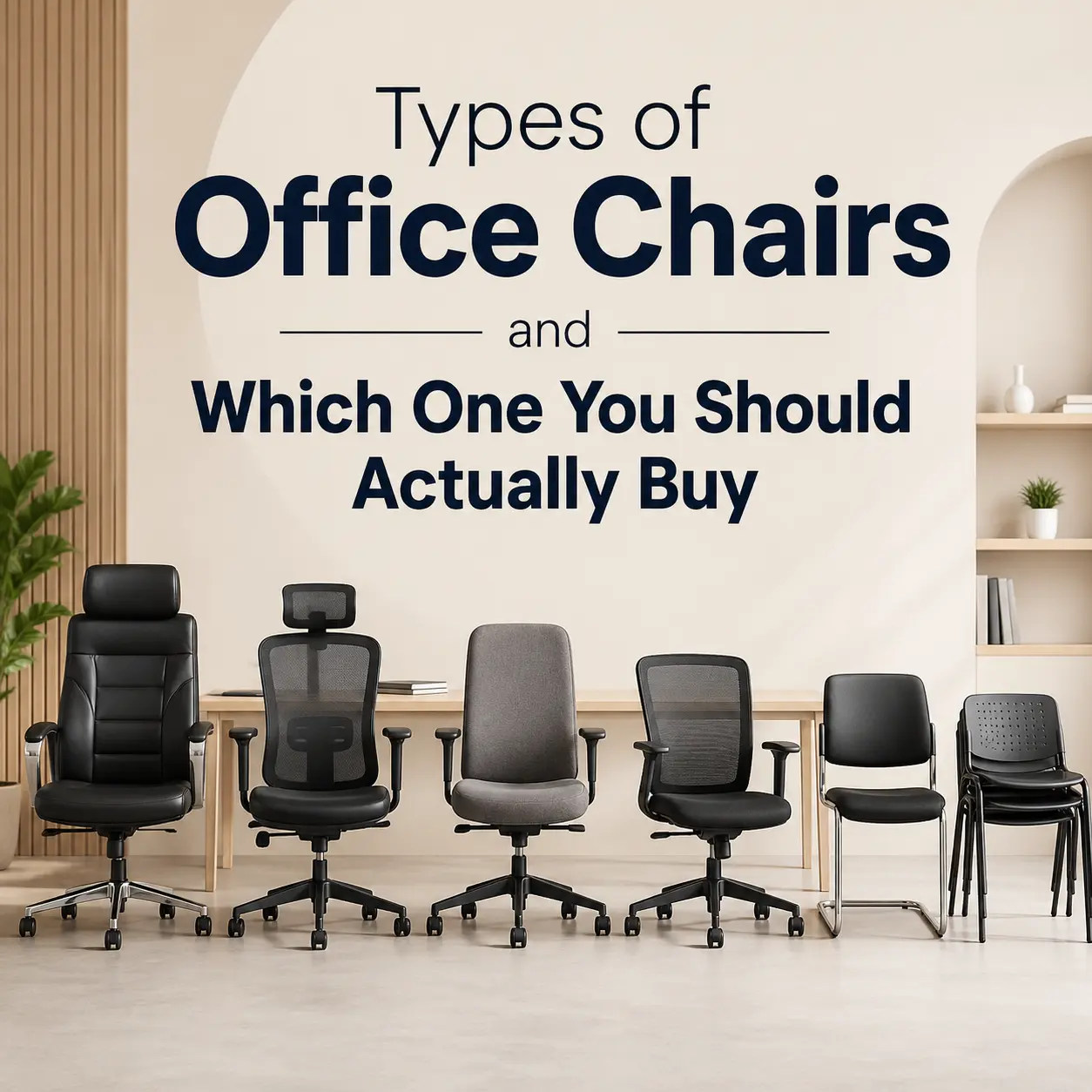

The right office chair keeps your back supported, your posture steady, and your body relaxed through the day. The wrong one slowly builds up pain in your lower back, shoulders, and neck. That is why choosing the right type matters more than the design or price tag.
If you sit for long hours, you need full back support. If you move around a lot, you need flexibility. And if your space is small, you need something compact. Once you match the chair to your routine, things get much easier.
What are the types of office chairs and which one is best?
Office chairs come in a few main types. High back chairs suit long hours and full support. Medium back chairs fit daily office work with some movement. Low back chairs are better for short tasks and small spaces. Mesh chairs help with airflow in warm conditions. Visitor’s chairs are used for guests, and stackable chairs help when you need extra seating that can be stored.
The best office chair depends on how long you sit, your desk height, and how often you move during the day.
High Back
High back office chairs are made for long sitting hours. They support your full back, including your shoulders and neck, which helps keep your spine in a natural position.
If you are looking for an ergonomic high back office chair for back pain, focus on lumbar support first. It should sit right in the curve of your lower back. If it feels off, your posture will shift without you noticing.
Seat depth also matters. When you sit all the way back, there should be a small gap between the seat edge and your knees. This keeps your legs comfortable and avoids pressure.
The headrest helps during short breaks when you lean back. It takes pressure off your neck and shoulders. This type of chair works well for long desk hours where you stay seated most of the time.
Medium Back
Medium back office chairs support your lower and mid back. They feel lighter and allow more movement, which works well in active office setups.
A comfortable office chair for daily office work should still support your lower back properly. If it does not, your body slowly leans forward, and that leads to strain in your shoulders.
Keep your sitting position simple. Feet flat on the floor, elbows level with your desk, and your screen at eye level. When these line up, your body stays relaxed without extra effort.
Medium back chairs are a good fit if your day includes both desk work and moving around.
Low Back
Low back chairs are compact and easy to place in smaller spaces. They support your lower back and keep things simple.
They work best for short sitting sessions. Since your upper back is not supported, your body stays a bit more active while sitting. That can feel fine for quick tasks.
Set your screen at eye level so your neck does not bend forward. That one small change helps avoid strain.
Low back chairs are useful for reception desks, small home offices, or setups where you sit and stand often.
Mesh Chairs
Mesh office chairs are great in warm environments. The breathable backrest allows air to pass through, which keeps your back cool during long hours.
A breathable ergonomic mesh office chair for long hours also adjusts to your back shape. The mesh spreads your weight evenly, so you do not feel pressure in one spot.
Check the quality of the mesh. It should feel firm and supportive when you sit. If it feels loose, it may sag over time.
These chairs are lighter, so moving them around is easy. That helps in flexible workspaces where seating changes often.
Visitor’s Chairs
Visitor’s chairs are made for short use. They are placed in front of desks or in waiting areas for clients and guests.
They should feel comfortable for short meetings. A lightly padded seat and a steady backrest help people sit properly.
The design should match your office setup. Clean and simple styles give a better impression. Materials like leather or plastic are easier to clean in busy spaces.
Keep enough space between chairs so people can sit and stand easily.
Stackable Chairs
Stackable chairs help when you need extra seating without filling your space all the time. You can stack them and store them when not in use.
They are useful for meetings, training sessions, or events. You can set them up quickly and clear them just as fast.
Even though they are simple, they should feel stable when you sit. A strong frame and a good seat shape make a difference during longer sessions.
They work well in offices that need flexible seating without taking up permanent space.
Conclusion
The right office chair makes your workday smoother. You sit down, get comfortable, and focus on what matters without adjusting your position every few minutes.
Upgrade your office setup with the right chair
If your current chair leaves you shifting around or feeling sore by the end of the day, it is time for a change. A better chair can fix that faster than you expect.
Fairdeal Furniture offers a wide range of office chairs for long hours, daily office use, and flexible workspaces. Take a look, try what fits your setup, and pick the one that feels right the moment you sit.