

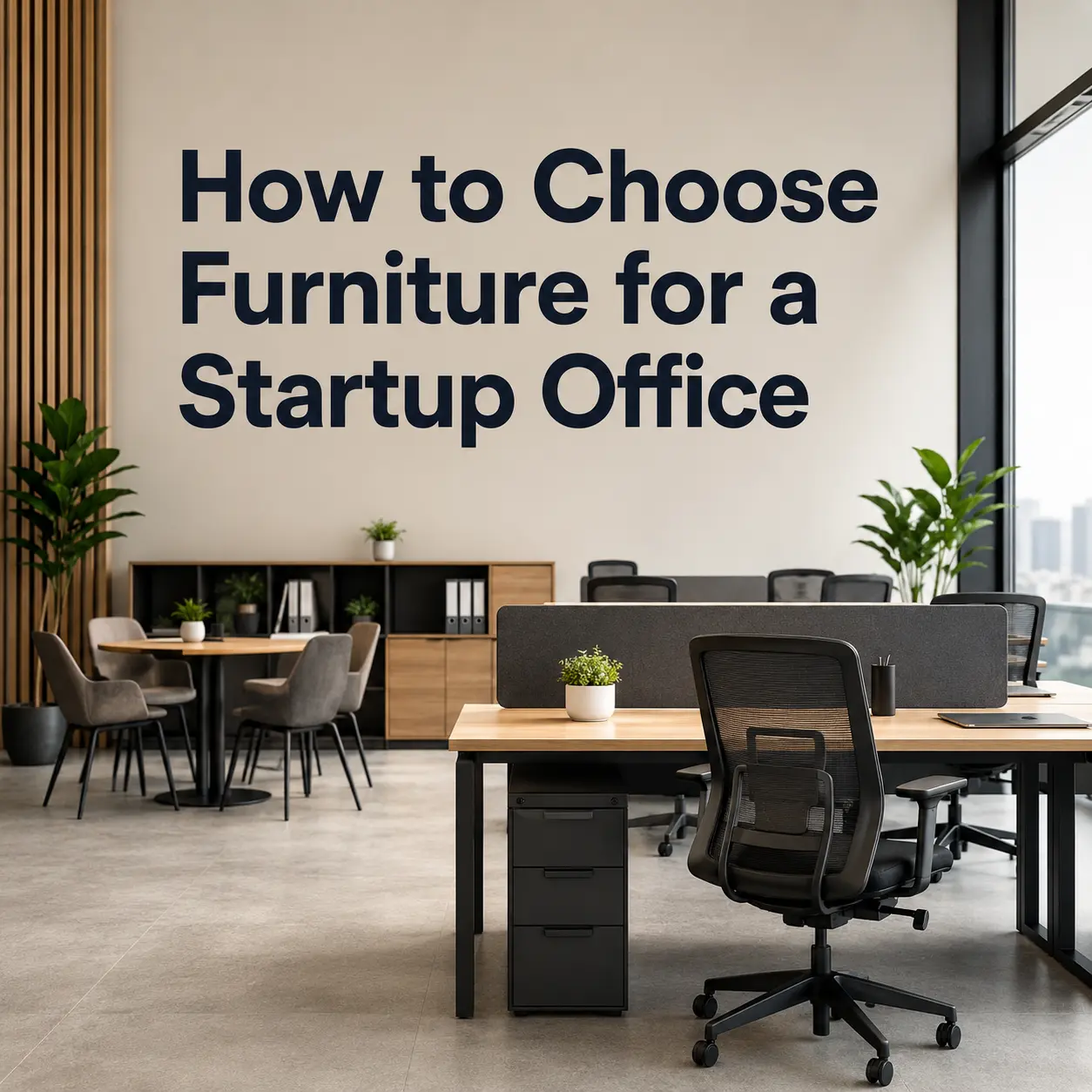

A startup office can go from half-empty to fully occupied surprisingly fast. One new hire becomes three, a small meeting corner becomes a daily gathering spot, and those few files on a shelf suddenly turn into stacks of paperwork.
That’s why choosing office furniture isn’t something to rush. The right furniture helps your team stay comfortable, keeps the office organized, makes collaboration easier, and gives your business room to grow. A few smart decisions at the beginning can save a lot of money, space, and frustration later.
Why Does Office Furniture Matter in a Startup?
Office furniture affects almost every part of the workday. Employees sit at their desks for hours, move between meetings, access storage, and collaborate with teammates. When the furniture supports those activities, the office feels smoother and easier to work in.
A well-planned office setup can help with:
- Employee comfort
- Better organization
- Improved teamwork
- Efficient use of office space
- Professional client impressions
- Future business growth
The goal is simple. Create a workspace where people can focus on their work instead of dealing with discomfort, clutter, or lack of space.
How Should You Plan Your Office Layout?
Before buying office desks, ergonomic chairs, conference tables, or storage cabinets, start with the floor plan.
Measure the office carefully and think about how employees will move around during the day. It is easy to underestimate how much space chairs need when pulled out or how much room people need to walk comfortably between desks.
A common mistake is trying to fit as many workstations as possible into the office. This may seem efficient at first, but crowded offices often feel stressful and become difficult to manage as the team grows.
Areas Every Startup Office Should Include
Most startup offices benefit from having:
- Employee workstations
- Meeting areas
- Storage space
- Reception or visitor seating
- Open walkways
- Extra room for future employees
Even if you don’t need every area immediately, planning for them now makes future expansion much easier.
How Do You Choose the Right Office Chairs?
If there is one area worth spending a little extra on, it is office chairs.
Employees may spend seven to nine hours sitting every day. A chair that feels fine for fifteen minutes in a showroom can feel very different after a full workday.
An ergonomic office chair helps support posture and improves comfort throughout the day.
Features to Look for in an Ergonomic Office Chair
| Feature | Why It Matters |
| Adjustable Height | Helps employees sit comfortably at their desks |
| Lumbar Support | Supports the lower back |
| Adjustable Armrests | Helps reduce shoulder strain |
| Breathable Material | Improves comfort during long hours |
| Swivel Base | Makes movement easier |
When employees are comfortable, they spend less time adjusting their seating and more time focusing on their work.
How Do You Choose the Best Office Desks?
Not every desk works for every team.
A software developer using multiple monitors will have different workspace needs than a salesperson or accountant. Choosing desks based on actual work habits helps employees stay productive and keeps the office organized.
Popular Office Desk Options
Bench Desks
Bench desks work well for teams that collaborate frequently and want to use office space efficiently.
Executive Desks
These desks provide additional workspace and are commonly used by managers and business owners.
Height Adjustable Desks
These desks allow employees to alternate between sitting and standing throughout the day.
Corner Desks
Corner desks make good use of office corners and can provide extra workspace without taking up additional floor area.
The best office desks provide enough room for daily work without making the office feel crowded.
Why Is Storage Furniture So Important?
Storage usually seems like a small concern until it suddenly becomes a big one.
A startup may begin with a few files, some stationery, and basic office equipment. Over time, documents, marketing materials, cables, supplies, and personal belongings start piling up.
Without proper storage furniture, desks quickly become cluttered.
Common office storage solutions include:
- Filing cabinets
- Storage cupboards
- Shelving units
- Mobile drawer units
- Lockable cabinets
Good storage helps employees find what they need quickly and keeps the workspace looking professional.
How Should You Set Up Meeting Areas?
Meeting rooms often take up a large portion of office space, so it makes sense to plan them carefully.
Many businesses purchase large conference tables because they look impressive. Then most meetings end up involving four or five people sitting around a table built for twelve.
Instead, choose meeting room furniture based on how your team actually works. Comfortable chairs, practical table sizes, and enough room for laptops and presentations are usually all that’s needed.
Flexible furniture can also help one room serve multiple purposes, including meetings, training sessions, workshops, and client presentations.
How Can Office Furniture Support Future Growth?
Growth is one thing every startup hopes for, yet many offices are not planned for it.
When choosing office furniture, think about where your company could be in a year or two. Will you need more desks? Additional storage? Larger meeting areas?
Modular office furniture can make expansion much easier. These furniture solutions allow businesses to add workstations and storage as the team grows.
Buying furniture that can adapt to future needs often saves money compared to replacing everything later.
Why Should You Think About Power and Cable Management?
Few things make an office look messy faster than tangled cables.
Computers, monitors, phones, chargers, printers, and other equipment all need power. Without planning, cables can quickly spread across desks and floors.
Many modern office desks now include cable trays, wire channels, and built-in power access points. These features help keep workstations clean and organized.
Employees also appreciate having power outlets within easy reach instead of crawling under desks to plug something in.
How Does Office Furniture Affect Client Impressions?
Clients start forming opinions about your business the moment they walk through the door.
A clean reception area, organized workstations, and comfortable meeting rooms create a positive impression before any conversation even begins.
Expensive furniture is not necessary. A well-organized office with coordinated furniture often feels far more professional than a space filled with oversized or mismatched pieces.
Simple, practical furniture choices usually create the best results.
What Office Furniture Mistakes Should Startups Avoid?
Many startups run into the same problems during office setup.
The most common mistakes include:
- Buying furniture before measuring the office
- Choosing furniture based only on appearance
- Ignoring future growth plans
- Underestimating storage needs
- Purchasing oversized conference tables
- Overcrowding work areas
- Forgetting about cable management
Avoiding these mistakes can save money and help create a workspace that continues working well as the business grows.
Conclusion
The best startup offices are rarely the ones filled with the most furniture. They’re the ones where every desk, chair, storage unit, and meeting table serves a purpose and fits the way the team works.
When you choose office furniture carefully, you’re creating a workspace that supports productivity, organization, collaboration, and future growth from day one.
If you’re planning a new office or upgrading your current workspace, Fairdeal Furniture can help you find office desks, ergonomic chairs, workstations, conference tables, reception furniture, and storage solutions that fit your space and budget. A well-designed office starts with the right furniture, and the right furniture starts with choosing a supplier that understands how businesses grow.
FAQs
What furniture should a startup office buy first?
A startup office should begin with the essentials: ergonomic office chairs, functional office desks, and basic storage units. These items directly affect employee comfort and daily productivity. Meeting room furniture and additional office accessories can be added as the team grows.
How much should a startup budget for office furniture?
The budget depends on team size, office space, and furniture quality. Many startups allocate more funds to office chairs and workstations because employees use them every day. Investing in quality furniture early can help reduce replacement and maintenance costs later.
Is modular office furniture a good choice for startups?
Yes. Modular office furniture allows businesses to expand workstations, add storage, and reconfigure layouts without replacing existing furniture. This flexibility makes it easier to adapt as the company grows.
How many workstations can fit in a small office?
The number depends on the office layout, desk size, and required walkways. A smaller office should prioritize comfortable spacing over maximum capacity. Employees need enough room to move freely and work without feeling crowded.