

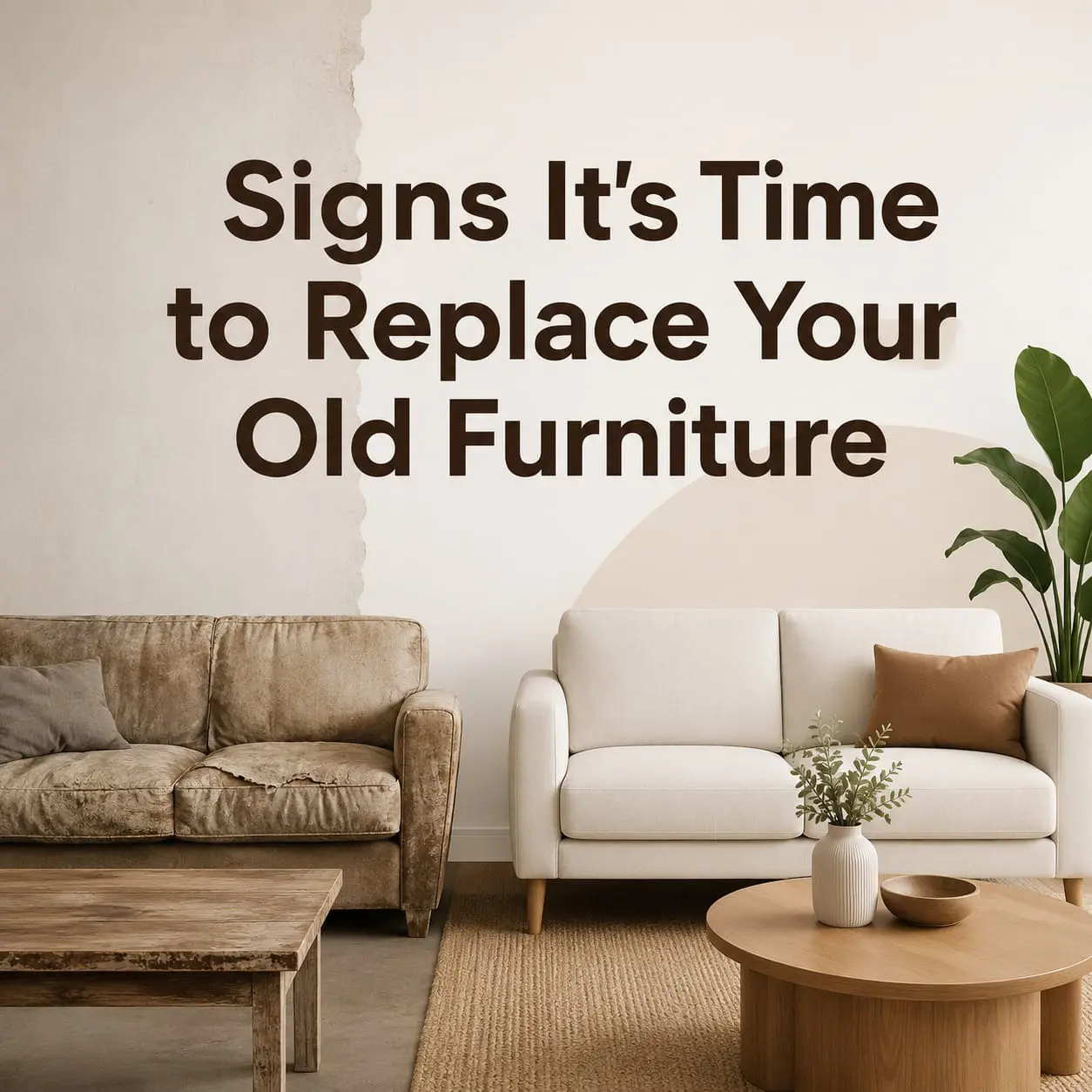

Signs It’s Time to Replace Your Old Furniture (Complete Homeowner Guide)
Furniture rarely breaks overnight. It usually starts small — a dining chair wobbles a little more each month, a sofa loses its support during movie night, or a drawer needs an extra push to close. These small signs add up. Catching them early saves money, improves comfort, and keeps your home feeling fresh and functional.
Key Takeaways
- Sagging cushions indicate worn-out support.
- Wobbly furniture often signals structural damage.
- Deep cracks and broken frames are safety concerns.
- Persistent odors may mean years of buildup inside upholstery.
- Frequent repairs often become more expensive than replacement.
- Modern furniture can improve comfort and make rooms feel more spacious.
- Most sofas last 7–15 years, while quality wardrobes can last 15–20 years.
What Are the Signs It’s Time to Replace Your Old Furniture?
Look for these common warning signs:
- Sagging cushions or uncomfortable seating
- Wobbly chairs or shaky tables
- Cracked wood or damaged frames
- Torn upholstery that keeps getting worse
- Frequent repairs
- Odors that return after cleaning
- Furniture that no longer fits your space
- Safety concerns caused by weak or unstable parts
One sign by itself is not always a reason to replace furniture. When several of these problems appear together, the furniture has usually reached the end of its useful life.
How Can You Tell If Furniture Has Lost Its Comfort?
Comfort changes so gradually that many people adapt without realizing it. You may start adding extra pillows to the sofa, avoiding a particular dining chair, or waking up feeling stiff after sleeping on the same mattress.
Try this simple test: sit on your sofa for ten minutes. If you can feel the wooden frame, springs, or hard spots beneath the cushioning, the filling has worn down significantly.
Signs your furniture is no longer comfortable:
- Flattened cushions that do not regain their shape
- Feeling springs or the frame through the upholstery
- Back, neck, or hip discomfort after sitting
- Needing extra pillows for support
- Uneven or lumpy seating surfaces
Good furniture supports your body evenly. Once that support disappears, your body starts working harder to stay comfortable.
Why Does Furniture Become Wobbly?
A loose chair rarely stays loose for long. Every time you sit down, stand up, or move the furniture, the joints carry weight. As they wear down, the movement becomes slightly larger, which weakens the frame even more.
You may tighten the screws and feel improvement for a while, only for the wobble to return. That often means the wood around the screws has already started wearing out.
Watch for these warning signs:
- Chairs rocking from side to side
- Beds squeaking every night
- Coffee tables shaking during use
- Drawers sticking or falling out of alignment
- Arms on sofas moving independently from the frame
If the same repair keeps coming back, the furniture is telling you something important.
When Does Visible Damage Mean It’s Time to Replace Furniture?
Normal use leaves small scratches and dents. Structural damage is different. Look carefully for:
- Cracked wooden frames
- Broken chair legs
- Split wood at joints
- Bent metal supports
- Torn fabric that keeps spreading
- Chipped corners that affect stability
Expert Tip: Cosmetic scratches can usually be repaired. Damage that affects the frame or support structure is often a sign that replacement is the safer and more durable choice.
For example, a tiny crack in a chair may seem harmless today, but after hundreds of times sitting down and standing up, that crack can grow until the chair becomes unstable.
Can Old Upholstered Furniture Affect Indoor Air Quality?
Yes. Upholstered furniture collects dust, pet hair, cooking odors, body oils, pollen, and moisture over many years. Even regular vacuuming reaches only the surface.
Signs the upholstery may be too old:
- Odors return shortly after cleaning
- Cushions feel damp or musty
- Allergy symptoms worsen while sitting on the furniture
- Fabric looks clean but smells stale
Replacing older sofas and fabric chairs can make a room feel cleaner and fresher without changing anything else.
When Do Furniture Repairs Stop Being Worth It?
One repair is easy to ignore. Then another appears: a drawer runner breaks, a cushion loses its shape, or a chair becomes loose again. The repair list keeps growing.
Instead of looking at each repair separately, consider the total amount spent over the last year and ask yourself: if I repair this today, what are the chances something else will need fixing next month?
If the honest answer is “probably,” replacement often becomes the better financial decision.
| Repair If… | Replace If… |
|---|---|
| Minor scratches | Broken frame |
| Loose screw | Cracked wood |
| Small stain | Repeated repairs |
| Minor upholstery fix | Safety concerns |
Can New Furniture Make a Small Room Feel Bigger?
Absolutely. The size and shape of your furniture have a huge effect on how spacious a room feels. Large sofas with thick armrests, oversized cabinets, and bulky TV units can make a room feel crowded even when there is plenty of floor space.
Modern furniture often helps because it offers:
- Slimmer profiles
- Cleaner lines
- Raised legs that create visual openness
- Built-in storage
- Modular or space-saving designs
Many homeowners notice the biggest improvement after replacing just one oversized piece.
Why Is Old Furniture a Safety Risk?
Furniture should feel solid every time you use it. A leaning wardrobe, cracked bed frame, loose bookshelf, or weak chair can become dangerous before it actually breaks.
This is especially important when:
- Children climb on furniture
- Older family members use chairs for support
- Pets regularly jump onto sofas and beds
- Heavy items are stored on shelves or cabinets
If furniture still feels unstable after repairs, replacing it is usually the safer choice.
How Long Does Furniture Usually Last?
Furniture does not come with an exact expiration date. How often it is used matters more than its age.
| Furniture Type | Average Lifespan |
|---|---|
| Sofa | 7–15 years |
| Mattress | 7–10 years |
| Dining Table | 15+ years |
| Wooden Wardrobe | 15–20 years |
| Office Chair | 7–10 years |
These are general estimates. A sofa used every day by a large family will naturally wear out sooner than one in a guest room.
How to Make Furniture Last Longer
Good habits can slow down everyday wear and delay expensive repairs.
- Rotate sofa cushions every few weeks.
- Lift chairs instead of dragging them.
- Tighten loose screws as soon as you notice movement.
- Clean spills before they soak into the fabric.
- Keep wooden furniture out of direct sunlight for long periods.
- Dust surfaces regularly to reduce fine scratches.
These simple habits help furniture stay in better condition and extend its useful life.
Should You Repair or Replace Old Furniture?
| Repair If… | Replace If… |
|---|---|
| Minor scratches | The frame is damaged |
| Loose hardware | Comfort has noticeably changed |
| Small cosmetic flaws | Repairs keep coming back |
| Isolated upholstery damage | Safety is a concern |
Looking at the overall condition of the piece rather than one single problem usually makes the decision much clearer.
When Should You Replace Each Type of Furniture?
Sofa
Replace when cushions stay flat, support disappears, or the frame begins to creak or wobble.
Mattress
Replace when you notice sagging, visible lumps, or wake up with new aches and stiffness.
Dining Chairs
Replace when they become unstable or can no longer be tightened securely.
Coffee Tables
Replace when cracks affect stability or the surface becomes unsafe to use.
Wardrobes
Replace when doors no longer align properly, shelves sag, or the structure leans.
Final Thoughts
Furniture slowly tells you when it is ready to be replaced. A sofa that no longer feels comfortable, a chair that never stops wobbling, or a bed that squeaks every night are all signs worth paying attention to. Replacing furniture at the right time helps you enjoy your home instead of constantly fixing the same problems.
If you are thinking about giving your home a fresh look, now is a great time to start. Explore the latest collection at Fairdeal Furniture and discover stylish sofas, elegant dining sets, comfortable bedroom furniture, and smart storage solutions designed for everyday living. Visit our showroom or browse the collection today and find furniture you will enjoy coming home to every day.
Frequently Asked Questions
How do I know if my sofa is too old to keep?
Sit on it for ten minutes. If you can feel the wooden frame or springs through the cushioning, the filling has broken down. Combine that with visible frame damage, recurring odors, or repeated repairs, and it is a strong sign the sofa is past its useful life.
Is it cheaper to repair or replace furniture?
It depends on whether the damage is cosmetic or structural. A single surface repair is usually cheaper than replacement, but once you are paying for the second or third repair on the same piece within a year, replacement is typically the better long-term value.
Can old furniture cause allergies?
Yes. Upholstered furniture traps dust, pet hair, pollen, and body oils deep in the cushion filling over years, and these particles can be released into the air during use, which may worsen allergy symptoms for sensitive individuals.
How often should you replace a mattress?
Most mattresses should be replaced every 7–10 years, though heavier daily use can shorten that timeline. Sagging, visible lumps, or waking up with new stiffness are signs a mattress may need replacing sooner.
Can wobbly furniture be fixed instead of replaced?
Sometimes. If the wobble is new and screws simply need tightening, a repair usually works. If the same joint keeps loosening again within weeks, the wood around the screw holes has likely worn out, and replacement is usually the more reliable long-term solution.
What furniture should be replaced first?
Start with pieces that affect daily comfort and safety the most, such as sofas, mattresses, and frequently used chairs. These items have the biggest impact on how your home feels every day.
How do I know if furniture is structurally damaged?
Look for cracked wood, split joints, bent metal, loose legs, or frames that move independently when pressure is applied. Structural damage is different from surface scratches and usually indicates a much more serious problem.
Does replacing furniture increase home value?
While furniture itself is not usually included in a home appraisal, updated, well-proportioned furniture can make a property feel cleaner, more spacious, and better maintained, which can improve buyer perception.